
The History of Aoudad, Aoudad in Texas, & Hunting Aoudad at Barbell Ranch
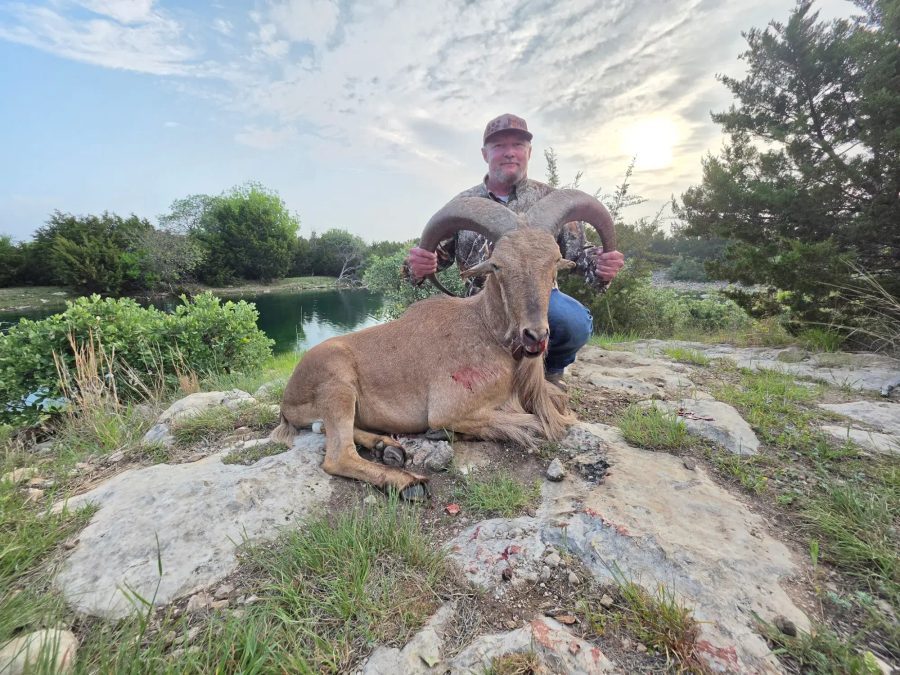
Of all the exotic big game animals that roam the Texas landscape, few command as much respect as the aoudad. Known also as the Barbary sheep, this rugged import from North Africa is a testament to resilience, thriving in the steep, broken country of West Texas. The experience of hunting aoudad is a true test of a hunter’s skill, patience, and physical resolve. It is a pursuit that often requires long hours behind glass and careful stalks across challenging terrain, where a precise shot is paramount. For those who appreciate an animal that must be earned, the aoudad presents one of the finest challenges available.
These animals are not found in manicured pastures but in the wilder corners of the ranch, where their keen eyesight and astounding athleticism give them every advantage. Aoudads can vanish into rock, brush, and shadow with remarkable speed, a trait inherited from their ancestors in the mountainous deserts of the Sahara. Their scientific name is Ammotragus lervia, a goat-antelope that, as Britannica notes, is more closely related to wild goats than to true sheep. This goat-like toughness is precisely what has allowed them to flourish in Texas, turning our canyons, draws, and rocky hillsides into a new home.
A Profile of the Barbary Sheep
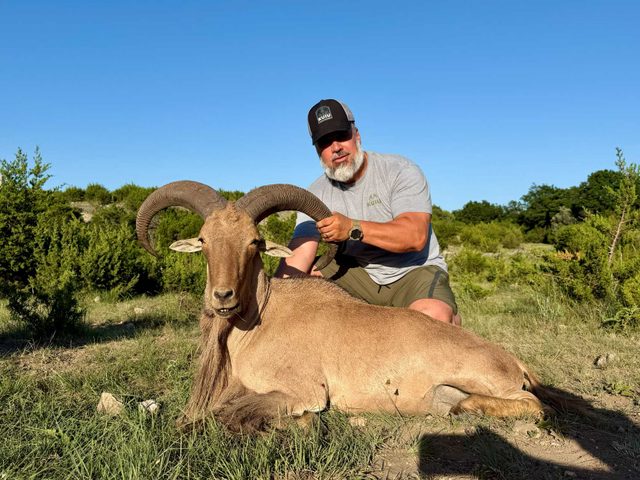
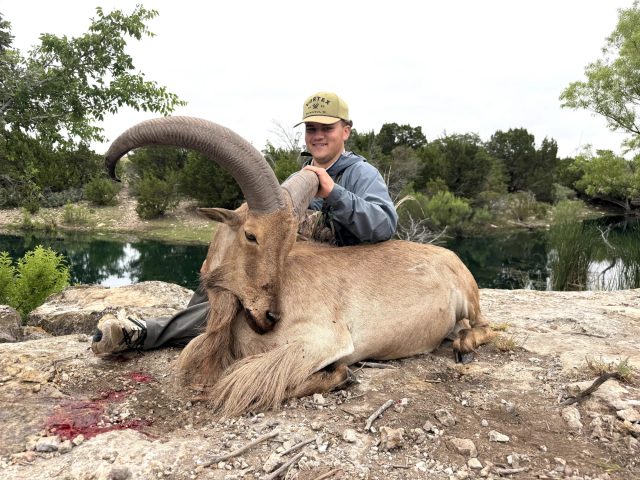
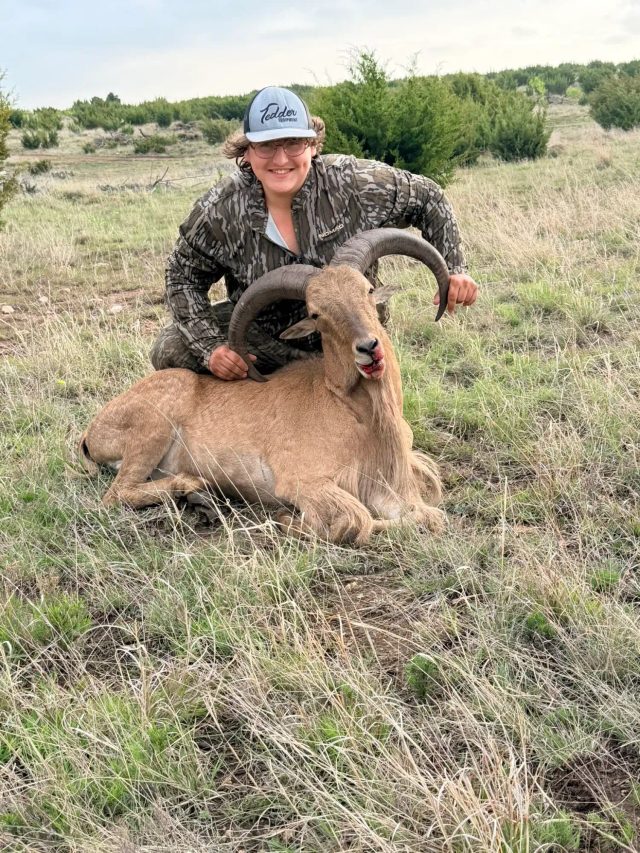
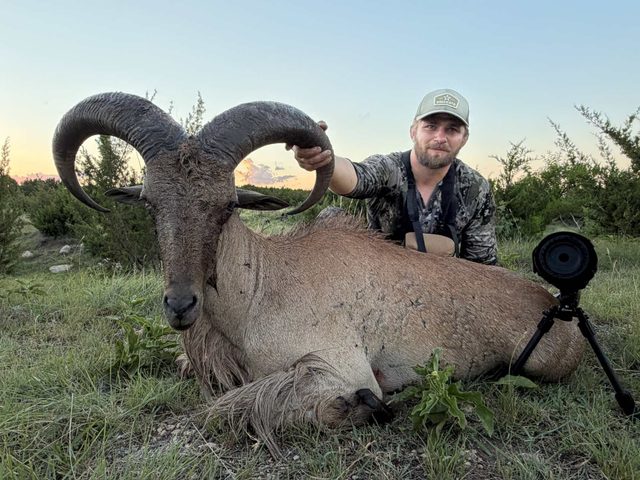
The aoudad is a powerfully built, mountain-adapted animal with a distinctive sandy-brown coat that provides excellent camouflage. Their most prominent features are the heavy, backward-curving horns carried by both sexes and the long, shaggy hair that forms a mane on the throat, chest, and front legs of mature rams. This impressive fringe, often called “chaps,” gives an old ram a commanding, primeval appearance.
Physical Characteristics and Behavior
Mature rams are formidable animals, weighing between 180 and 300 pounds, with some exceptional individuals exceeding that range. Ewes are significantly smaller, typically weighing from 90 to 140 pounds. The species as a whole has a weight range of approximately 143 to 319 pounds (65 to 145 kilograms), with males being considerably larger than females (Animal Diversity Web). A mature ram is unmistakable, identified by his thick body, powerful shoulders, heavy horn bases, and the extensive fringe that cascades down his chest. While both rams and ewes possess horns, a ram’s are much thicker and longer, sweeping outward, back, and then inward toward the neck in a dramatic arc (Texas Invasive Species Institute).
Standing roughly three feet at the shoulder, an aoudad is built for climbing. Its sandy coloration allows it to blend seamlessly into dry grass, tan rock, and sun-bleached hillsides. From a distance, a bedded group can be nearly impossible to distinguish from the landscape, often appearing as little more than a patch of brush or a shadow. This natural camouflage, combined with their exceptional eyesight, makes them incredibly difficult to spot and approach.
Adaptability and Diet
The aoudad’s diet is a key factor in its success. As both browsers and grazers, they consume a wide variety of grasses, forbs, brush, and even cactus. Their ability to survive in arid conditions is remarkable. Britannica explains that aoudads can subsist for days without drinking, and the Animal Diversity Web confirms they are well-adapted to dry climates, often obtaining sufficient moisture from the vegetation they eat. This hardiness allows them to thrive in landscapes that would challenge many native and exotic species, giving them a significant advantage in the drier parts of Texas.
From the Sahara to the American Southwest
To understand the aoudad is to understand its origins. This animal was forged in the harsh, rocky deserts of North Africa, a background that explains its physical prowess and wary nature.
Native Range and Historical Significance
The Barbary sheep’s native range encompasses the rugged, dry mountain ranges across countries like Morocco, Algeria, Libya, and Sudan. They evolved not in forgiving lowlands but in steep, broken, and arid terrain where survival demands constant vigilance and athletic ability. Here, they learned to climb swiftly, travel long distances, and use high ground to watch for danger.
In their native lands, aoudads were a vital resource. For the nomadic peoples of the Sahara, they provided meat, hides for shelter and clothing, hair for textiles, and sinew and horns for tools. They were a cornerstone of survival in an unforgiving environment. While aoudad populations are huntable and robust in Texas, it is a sobering fact that they are considered vulnerable in their native habitat. The Texas A&M Natural Resources Institute notes this contrast: the International Union for Conservation of Nature (IUCN) lists the species as vulnerable at home, even as it flourishes as an introduced species abroad (Texas A&M University).
Introduction to the United States

Aoudad first arrived in the United States over a century ago, initially as attractions in zoos and on private estates. Records from the Animal Diversity Web show Barbary sheep were brought to American zoos around 1900. Over time, surplus animals from these collections were sold to private landowners. Inevitably, some of these animals escaped or were deliberately released, leading to the first free-ranging populations in New Mexico in 1950 and, critically for Texas, in 1957.
This timing coincided with a growing interest in exotic wildlife among Texas landowners. Ranchers and wildlife managers began experimenting with non-native species that could adapt to the local environment. While some exotics remained largely confined behind high fences, the aoudad adapted so well that it quickly established formidable, free-ranging populations. They did not just survive; they thrived.
How Aoudad Conquered Texas
Today, Texas is arguably the premier destination in the world for an aoudad hunt. The initial release of aoudad into Palo Duro Canyon in 1957 was the beginning of a massive success story for the species. According to the Texas A&M Natural Resources Institute, they are now common across the state, with strongholds in the Trans-Pecos, Edwards Plateau, South Texas Plains, and the rough country where the Rolling Plains meet the High Plains.
This expansion is no surprise when one examines the Texas landscape. The canyons of the Panhandle, the limestone bluffs of the Hill Country, and the vast, rocky expanses of the Trans-Pecos provide ideal aoudad habitat. They use ridges, brushy slopes, and sheer-walled draws to evade predators and hunters alike. Their tolerance for heat and dry conditions makes them perfectly suited for regions where water is scarce for parts of the year. The Texas Invasive Species Institute describes the Barbary sheep’s preference for "dry, barren habitats with large rocks or mountains for climbing and hiding," a description that perfectly matches large swaths of West Texas.
The Art and Challenge of Hunting Aoudad
The difficulty of the hunt is a primary reason why hunters hold the aoudad in such high regard. This is an animal that tests a hunter’s core skills and rewards effort with one of the most memorable trophies in North America. An aoudad hunt is rarely a passive affair; it is an active pursuit that engages the hunter in every step of the process.
Why Pursue Aoudad?
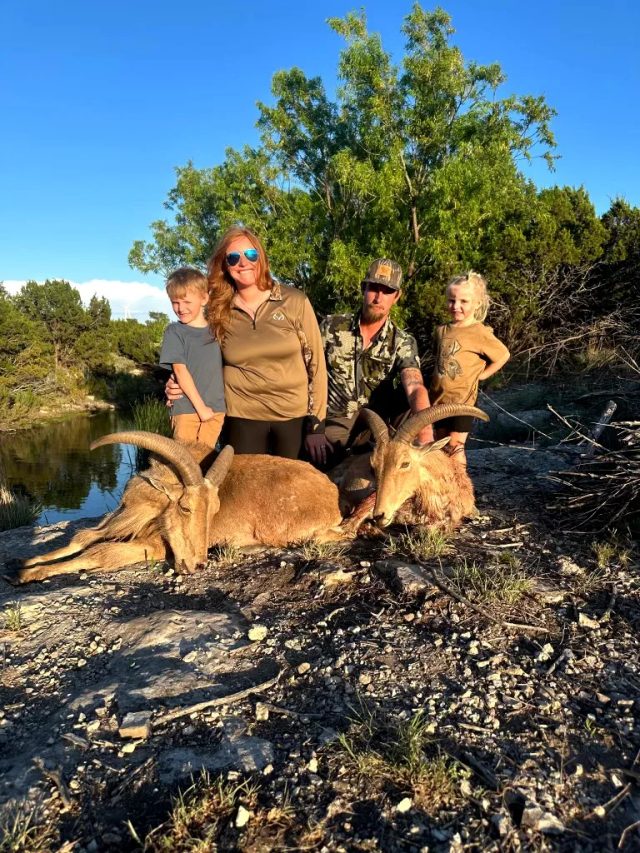
First and foremost, a mature aoudad ram is a spectacular trophy. With heavy, deeply curved horns, worn and broomed tips telling the story of a long life, and a thick, flowing mane, a big ram makes for an impressive mount. Because their horns grow continuously throughout their life, judging a ram involves assessing not just length but also mass, age, and overall character.
Second, the hunt itself offers a unique challenge. Unlike many other Texas hunts, success on aoudad often depends on spot-and-stalk tactics. It is a western-style hunt set in the heart of Texas, requiring hunters to glass from high points, carefully plan an approach using wind and terrain, and execute a difficult stalk to get within ethical range.
Third, aoudad provide excellent, lean red meat when handled properly in the field. It is well-suited for steaks, roasts, and ground meat or sausage. As with any wild game, meat quality is influenced by the animal’s age, diet, shot placement, and field care, with younger animals generally being preferred for the table.
Finally, because aoudads are classified as an exotic species in Texas, hunting opportunities are available year-round on private ranches like BarBell. This allows for hunts to be scheduled outside the constraints of traditional deer seasons, providing a superb option for hunters looking to extend their time in the field.
The Demands of the Hunt
Hunters respect aoudad because they are tough in every sense of the word. The country they inhabit often requires physical exertion—climbing hills, navigating rocky draws, and crawling into a shooting position through cactus and brush. Their greatest defense is their eyesight. Aoudad often bed or feed in strategic locations that offer a commanding view of their surroundings. A careless hunter who silhouettes themselves on a ridgeline, slams a truck door, or glasses too quickly will likely send a herd fleeing over the nearest horizon.
Effective glassing is the cornerstone of hunting aoudad. Their camouflage is so effective that a hunter can scan a hillside for minutes before a flicker of an ear or the curve of a horn reveals a bedded animal. Patience and high-quality optics are essential. Once a group is located, wind direction becomes critical. Aoudad possess a keen sense of smell, and a shifting wind can end a stalk before it even begins.
Accurate shot placement is non-negotiable. Mature rams are heavily built with dense muscle and bone structure. A well-constructed bullet from an adequate caliber, delivered from a steady rest, is required for a clean, ethical harvest. Rushed shots on these animals are a recipe for a long and difficult recovery, as a wounded aoudad will typically seek the thickest, steepest country it can find.
In the Field: Judging a Trophy Ram
Evaluating aoudad in the field takes practice. While horn length is an obvious metric, it is not the only measure of a trophy ram. A truly mature specimen will exhibit heavy horn bases, significant mass carried throughout the length of the horns, and a deep, powerful curl. An older ram’s broomed or worn horn tips add immense character, signifying a life of fighting and survival. Body size and the development of the chaps are also key indicators of maturity. Many seasoned hunters prefer a ram that appears balanced and aged over a younger animal that may have longer but less massive horns. An experienced guide is invaluable in this process, helping a hunter assess an animal’s age and quality, often from a great distance and under fleeting circumstances.
Your Aoudad Hunt at BarBell Ranch
At BarBell Ranch, we provide an aoudad hunting experience that honors the animal’s wild nature and the challenge it represents. Our hunts are designed for those who wish to be active participants, engaging with the landscape and the animal on its own terms.
We typically employ a combination of hunting methods, tailored to the conditions, animal movement, and the hunter's preferences and abilities. A day might begin by glassing vast areas from a high point at first light, followed by safari-style driving to cover ground and locate herds. Once a promising ram is spotted, the real work begins with a carefully planned stalk. This dynamic approach ensures an engaging hunt that puts you in the center of the action. Before your hunt, we encourage you to contact us to discuss trophy expectations, lodging, and specific gear requirements, ensuring you are fully prepared for the experience.
Hunters should arrive with quality binoculars, broken-in boots, and a rifle they are confident shooting accurately from field positions. Aoudads are often most active during the cooler hours of early morning and late afternoon. Be prepared for shots that may be longer than typical whitetail scenarios; the ethical range is always determined by the hunter's skill, the rifle, the rest, and environmental conditions. Our guides are experts at reading the terrain and the animals, putting you in the best possible position for a successful shot.
Aoudad and the Texas Ecosystem: Conservation Through Management
While prized by hunters, the success of the aoudad in Texas also presents ecological management questions. As a non-native species, they can compete with native wildlife for forage, water, and habitat. The Texas Invasive Species Institute specifically notes their potential competition with native desert bighorn sheep and mule deer.
On well-managed private ranches, hunting is the primary tool for responsibly controlling aoudad populations. This is a core component of modern land stewardship in Texas. Landowners and managers must balance habitat health, animal densities, and trophy quality with their overall property goals. The revenue generated from guided aoudad hunts is essential, as it directly supports these management efforts. This income is reinvested into ranch operations, including habitat improvement, water source maintenance, and the conservation of the entire ecosystem that both native and exotic species share. This model, where private landowners lead wildlife management, is a defining feature of the Texas hunting landscape, and it allows species like the aoudad to be both a resource and a responsibility. You can learn more about our ranch's philosophy on our about page.
The aoudad has traveled from the mountains of North Africa to become one of the most sought-after and respected game animals in Texas. Resilient, intelligent, and perfectly adapted to rugged terrain, the Barbary sheep embodies the spirit of a true mountain hunt. Its heavy horns, flowing chaps, and wary nature make it a distinctive and challenging quarry.
In Texas, the aoudad exists as both a premier hunting opportunity and a complex management subject. Their populations flourish in the state's dry, rocky regions, a testament to their incredible adaptability. For hunters, this offers the chance to pursue a world-class trophy. For ranches like BarBell, it underscores our responsibility to manage these animals ethically and sustainably. We offer a hunt that embraces this challenge, providing a memorable experience focused on one of the toughest animals in the field. For those seeking a mature trophy ram, a new level of hunting challenge, or a Texas exotic hunt with true character, the aoudad is an unparalleled choice.
Book this hunt
Sources
- Britannica. (n.d.). Britannica. Retrieved June 30, 2026, from https://www.britannica.com/animal/aoudad
- Animaldiversity. (n.d.). (Animal Diversity Web). Retrieved June 30, 2026, from https://animaldiversity.org/accounts/Ammotragus_lervia/
- Tsusinvasives. (n.d.). (Texas Invasive Species Institute). Retrieved June 30, 2026, from https://tsusinvasives.org/home/database/ammotragus-lervia
- Texas A&M University. (n.d.). (Texas A&M University). Retrieved June 30, 2026, from https://nri.tamu.edu/publications/extension-publications/2025/aoudad-barbary-sheep-ammotragus-lervia/
- Tsusinvasives. (n.d.). Texas Invasive Species Institute. Retrieved June 30, 2026, from https://www.tsusinvasives.org/home/database/ammotragus-lervia
This article was drafted with the assistance of AI and reviewed by the BarBell Ranch team.